

Reactive Glaze: What It Is, and How to Care for It

If you have ever unpacked a set of reactive glaze plates and noticed that no two look quite the same, you are not imagining it, and nothing has gone wrong. That variation is exactly what reactive glaze is for.
This guide explains what reactive glaze is, what is normal and what is not, and the handful of habits that keep it looking good for years.
What is reactive glaze?
A glaze is a coating of glass that is fused onto ceramic in the kiln. It is what makes a plate smooth, wipeable and coloured.
Most glazes are designed to be predictable: one colour, one finish, the same every time. A reactive glaze is designed to be unpredictable. It contains minerals that react with one another and with the heat during firing, so the colour shifts as it melts. Where the glaze sits thick, it pools into deeper tones. Where it thins, over a rim or a curve, it breaks lighter. Speckles, streaks and soft gradients appear across the surface.
No two firings behave identically, so no two pieces come out identically either. Our tableware and mugs are glazed by hand, which adds a little more variation again.
What is normal, and what is not
Because every piece is different, it helps to know what you are looking at.
Normal, and part of the finish:
- Colour that is deeper in some places and lighter in others
- A lighter edge where the glaze has thinned over the rim
- Small flecks or speckles in the glaze
- Plates in the same set that are a close match rather than an exact one
Not normal, and worth telling us about:
- A chip or crack
- A bare patch where there should be glaze on the eating surface
- Anything sharp
If something arrives looking like the second list, get in touch with a photo and the team will help.
Washing reactive glaze

Our Havn, Rivah and Fika tableware and all of our mugs are dishwasher safe, so there is no need to hand wash them. A few habits make a real difference over time:
- Give each piece its own slot. Most chips happen when plates knock together, not when they are in use. Load them so they are not touching.
- Skip the abrasives. A normal sponge or brush is all the glaze needs. Scouring pads and gritty powders can dull the surface over time.
- Soak rather than scrub. If something has baked on, leave it to soak in warm soapy water for a while and it will lift without any force.
Using the microwave
The same ranges are listed as microwave safe, so reheating a plate of leftovers or warming a mug of milk is fine. Stoneware holds heat well, which is one of the things people like about it, but it also means a bowl can come out hotter than the food in it. Use a tea towel or an oven glove for anything that has been in for more than a minute or two.
What to avoid
None of our product pages list our tableware as oven safe or freezer safe, so we do not recommend using it in either.
The other thing to avoid is a sudden, extreme change in temperature, such as taking a bowl straight from the fridge and pouring boiling water into it, or putting a hot plate onto a cold, wet surface. Stoneware is tough, but any ceramic can crack if one part heats or cools much faster than the rest. Letting things come to room temperature first is enough.
Storing it
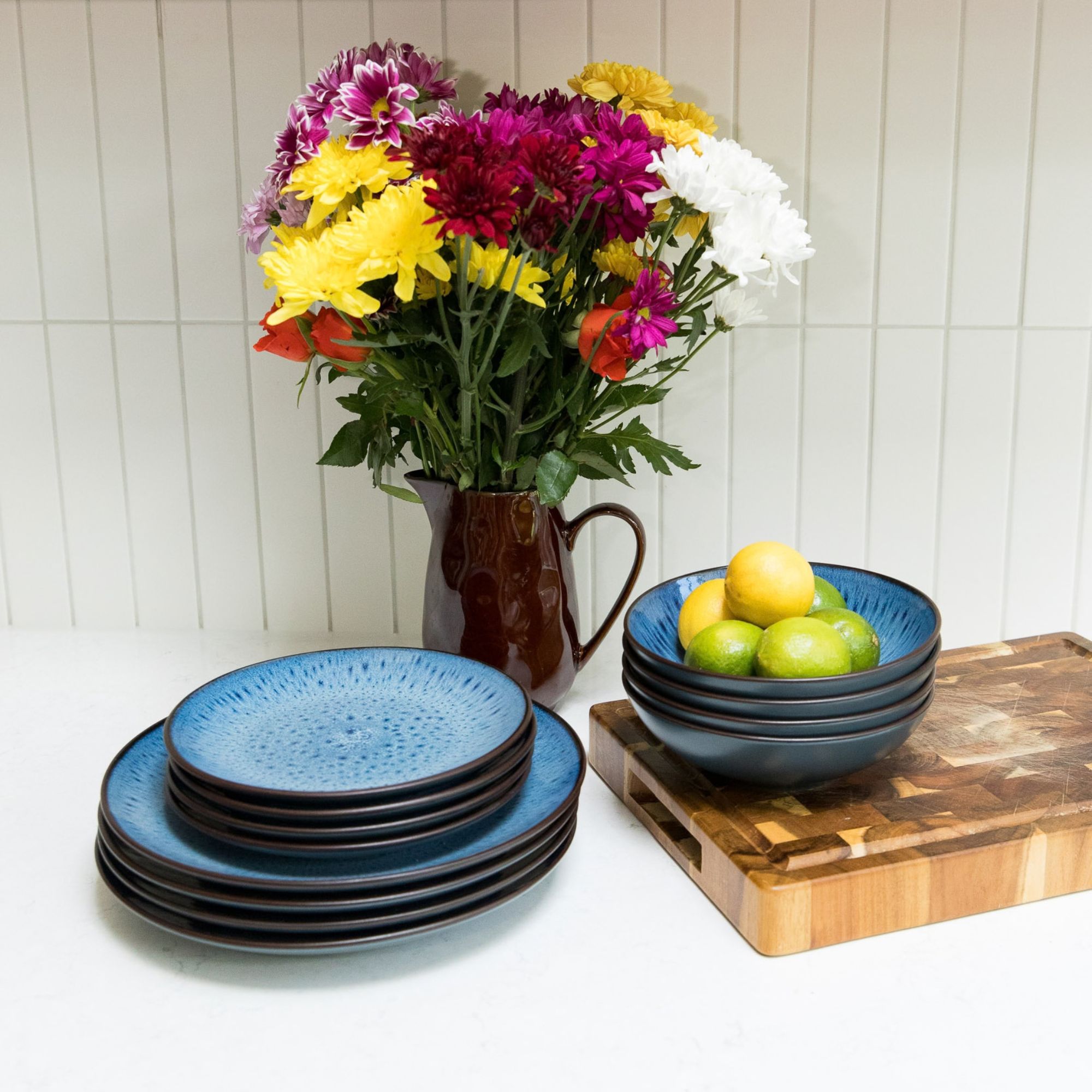
Stack plates of the same size together, largest at the bottom, and avoid dragging one across another when you take it off the pile. If your cupboard is crowded, a folded tea towel or a piece of kitchen roll between the best plates is an easy way to protect the rims.
Why it is worth the small amount of care
Reactive glaze tableware is made for everyday use. It is not something to save for best. Looked after with these simple habits, it will keep its colour and its character for years, and every meal on it will look a little more considered than it would on plain white.
Browse the full tableware collection, and if you are choosing a set for the first time, our guide to stoneware dinner sets explains the difference between a 12 piece and a 16 piece.
You must be logged in to post a comment.